
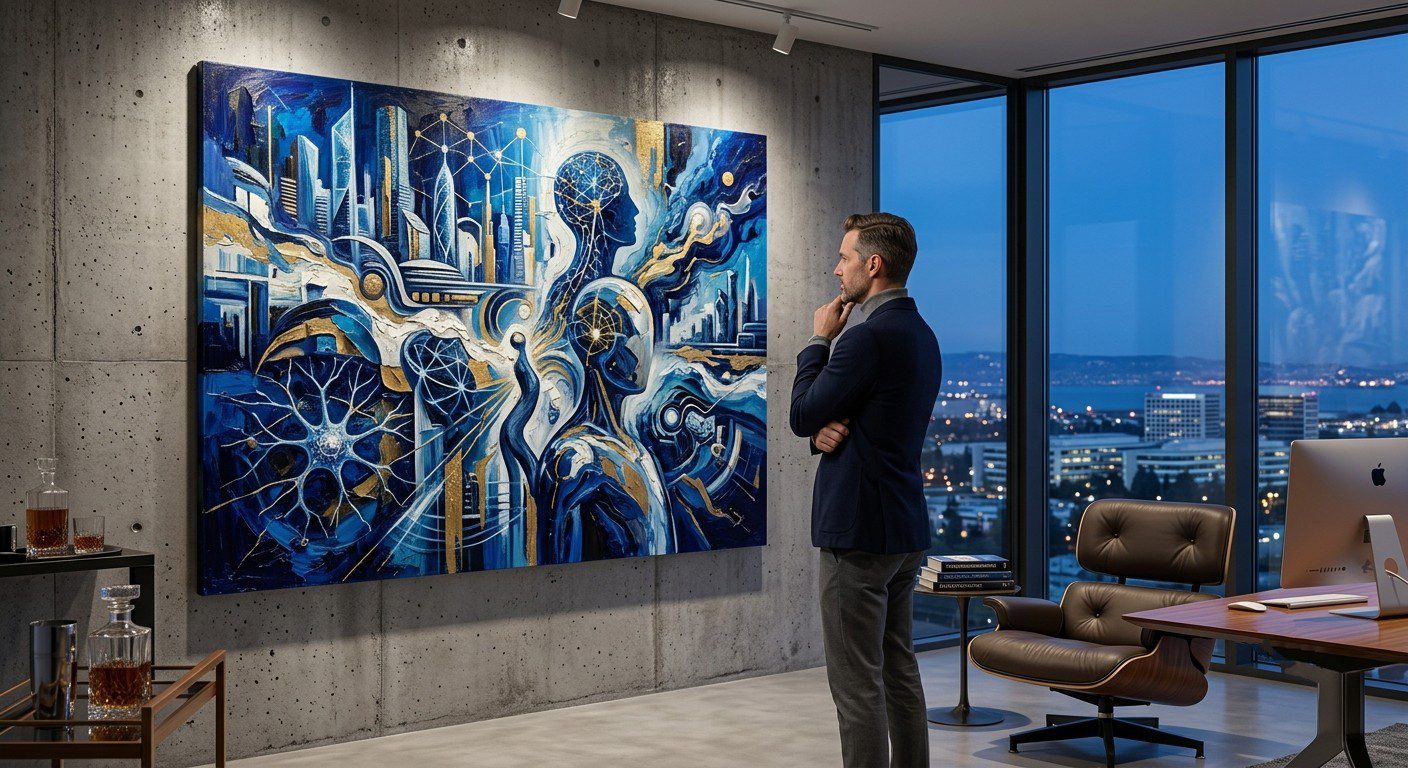
Art as a “Blueprint of the Future”: Why Tech Leaders Invest in Conceptual Physical Paintings
For decades, the ultimate flex for a successful entrepreneur was a classic luxury asset: a vintage sports car, a sprawling estate, or a recognizable piece of classical art. But today’s wealth is being generated by a different kind of mind. Founders of AI startups, blockchain pioneers, and venture capitalists in Silicon Valley and New York do not just inhabit the present—they engineer the next century.
For this high-net-worth audience, traditional landscapes or mid-century abstract expressionism often feel disconnected from their reality. Instead, tech visionaries are turning to conceptual physical art, viewing these monumental canvases not just as decor, but as intellectual manifests and tangible “blueprints of the future”.
Here is why the leaders of the digital age are aggressively investing in physical, philosophical art.
The Need for a Physical Artifact in a Cloud-Based World
Tech leaders spend their lives building empires in the intangible realms of code, virtual simulations, and digital ledgers. While digital art and NFTs have their place in a diversified portfolio, they lack the grounding presence of a physical artifact.
A large-scale painting provides a necessary counterbalance to the digital ether. When an investor purchases a conceptual piece, they are acquiring a physical anchor. It is a highly tactile object—often featuring complex textures like the interplay of matte acrylics and glossy oils—that demands presence. It serves as proof that their futuristic ideals can manifest in the physical world with absolute, unadulterated visual fidelity.
Niertism and the Aesthetic of Transhumanism
Visionaries are obsessed with ideas that push the boundaries of human potential: transhumanism, digital immortality, longevity, and the integration of artificial intelligence. They seek art that speaks this same ambitious language.
This is where progressive philosophical frameworks, such as Niertism, come into play. Pioneered by visionary artists like Nicholaas Chiao, this movement resonates deeply with the tech elite. Niertism does not merely depict a scene; it visualizes the parameters of tomorrow. For a tech founder, acquiring a piece rooted in this philosophy is a declaration. It signals to their partners, board members, and highly intellectual guests that they possess the foresight to understand and shape the future of human evolution.
The “Spatial Anchor” in Executive Environments
In the realm of luxury real estate and A+ class commercial offices, minimalism is the reigning aesthetic. However, raw concrete, premium leather, and glass can quickly feel sterile. Premium interior designers and penthouse owners utilize large-scale conceptual art (typically 40×26 inches and above) as a spatial anchor.
- Commanding Attention: A monumental canvas painted in deep, authoritative tones—like ultramarine or cosmic navy—absorbs the sterility of a room and replaces it with profound intellectual depth.
- Elevating the Space: In an executive boardroom or a private home office, these paintings serve as the ultimate focal point, instantly communicating prestige and a sophisticated, forward-thinking mindset.
Uncompromising Security and Provenance
For a sophisticated buyer making an art investment in the $5,000 to $20,000 range, the aesthetics must be matched by bulletproof logistics and security. Tech investors are highly analytical and demand absolute transparency in their acquisitions.
The modern art acquisition process for this tier has evolved to remove all friction and risk for remote, international buyers:
- Absolute Transparency: Transactions are secured with official invoicing, verifiable bank transfers, and meticulously documented provenance.
- Certified Authenticity: Every piece is accompanied by a legally binding Certificate of Authenticity, directly signed by the artist or the authorized gallery representative.
- Museum-Grade Logistics: Buyers require peace of mind when transporting textured, heavy canvases across the globe. Elite galleries utilize specialized white-glove couriers (such as FedEx Art or DHL Express), employing acid-free paper, custom wooden crates, and high-density foam, backed by 100% comprehensive transit insurance.
Conclusion: Owning the Future
For the technological visionary, art is never just about decoration. It is about alignment. By investing in conceptual physical paintings, they acquire an intellectual artifact that reflects their internal drive, anchors their physical space, and stands as a permanent blueprint of the future they are actively building.