
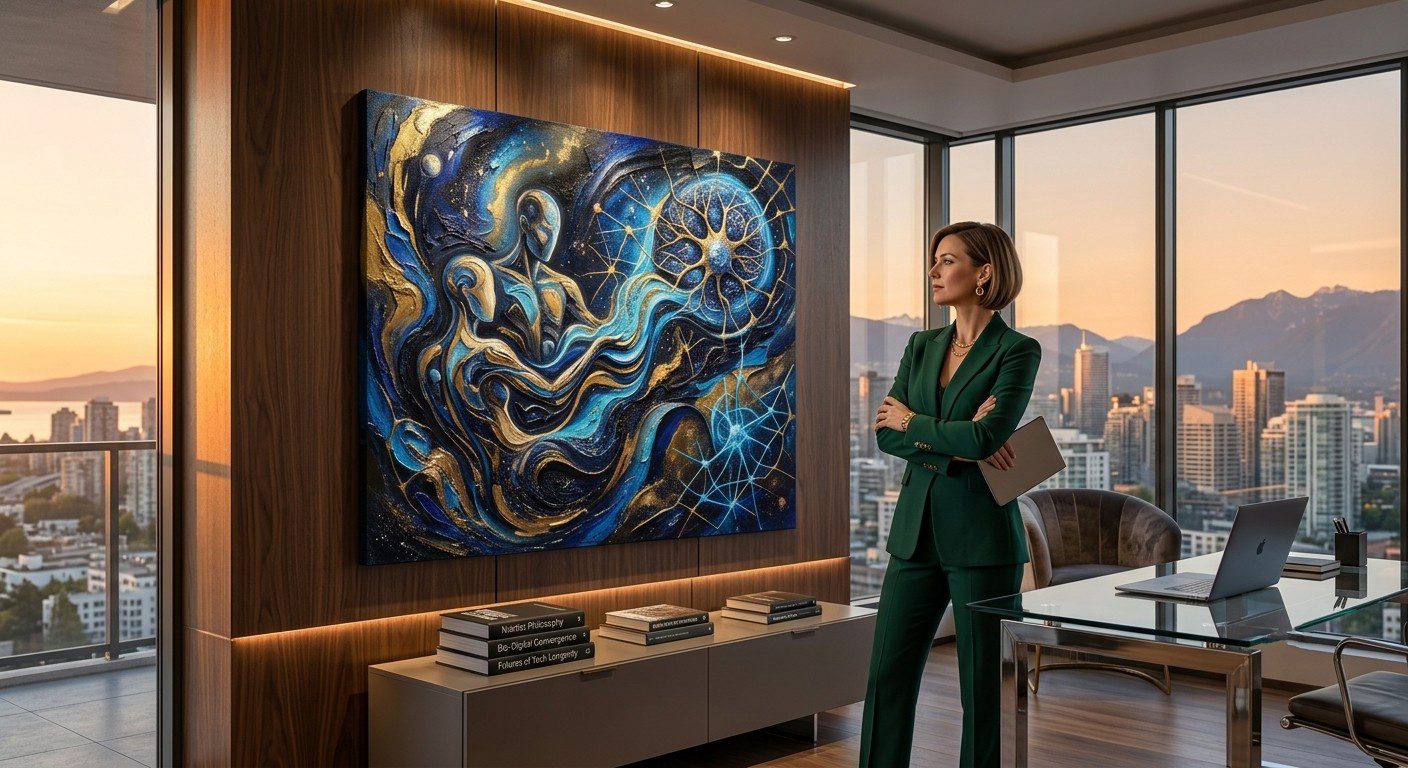
Beyond NFTs: Why Crypto Investors and Startup Founders Need Physical Artifacts in Their Mental Ecosystem
In recent years, the technological elite—from blockchain pioneers to AI startup founders—have dominated the digital asset space. NFTs and tokenized assets provided a novel way to quantify ownership in the cloud. However, as the digital realm becomes increasingly saturated, a new shift is occurring among ultra-high-net-worth tech visionaries.
They are realizing that a truly optimized mental ecosystem requires balance. To ground their visionary ideas, they are looking beyond the blockchain and investing heavily in physical conceptual art. Here is why the modern crypto-investor needs tangible artifacts in the real world.
The Limits of Digital Ownership
Digital assets are brilliant for liquidity and decentralized proof of ownership, but they are inherently invisible in daily life. You cannot walk past a cryptographic hash in your hallway, and a digital wallet does not set the tone for a high-stakes boardroom meeting.
For founders who spend their lives building the intangible—algorithms, virtual simulations, and decentralized networks—there is an accelerating psychological need for physical grounding. They require an intellectual artifact that exists in three dimensions; an object that can be touched, illuminated, and experienced.
The Artifact as an Extension of the Mind
Tech investors do not buy art simply to match the curtains. They acquire pieces that reflect their complex, forward-thinking mental models. They are drawn to philosophies like Niertism, which visually articulate the parameters of the future, transhumanism, and the intersection of human consciousness with artificial intelligence.
When a crypto-founder acquires a piece of physical conceptual art, they are not just buying a canvas. They are purchasing a physical manifestation of their own worldview. The intricate textures—the deliberate contrast between matte acrylics and glossy oils—serve as a visual language for the complexities they navigate daily in the tech sector.
Creating a Spatial Anchor in Executive Spaces
In the world of luxury real estate, premium penthouses and executive offices often lean heavily into minimalist design. Raw concrete, glass, and steel look incredibly sleek, but they can also feel sterile and devoid of human energy.
A large-scale physical painting (often 40×26 inches or larger) acts as a powerful spatial anchor.
- Commanding Presence: It absorbs the sterility of the room and injects it with profound depth.
- Status Signaling: When potential investors, partners, or fellow founders enter the space, a monumental, thought-provoking canvas instantly communicates the owner’s intellectual depth and foresight. It proves that their vision extends far beyond a computer screen.
Bulletproof Security and Seamless Logistics
For the analytical crypto-investor, the acquisition of a physical asset in the $5,000 to $20,000 range must be as secure and transparent as a smart contract. The friction of the traditional art world is a major barrier, which is why top-tier art agencies have optimized the purchasing process for this demographic.
Modern acquisitions of high-value physical art guarantee absolute peace of mind for remote buyers:
- Verifiable Provenance: Every transaction includes official invoicing, secure bank transfers (USD), and a legally binding Certificate of Authenticity signed by the artist or agent.
- Zero-Risk Logistics: Transporting a heavy, textured canvas globally requires precision. Galleries rely exclusively on specialized white-glove carriers (like FedEx Art or DHL Express).
- Museum-Grade Protection: Artworks are secured with acid-free paper, high-density foam, and custom-built wooden crates, backed by 100% comprehensive transit insurance.
Conclusion: Bridging the Digital and Physical Divide
NFTs and crypto assets will continue to shape the financial future, but the human mind still operates in a physical space. By moving beyond NFTs and integrating physical conceptual art into their environments, tech leaders are building a holistic mental ecosystem. They are surrounding themselves with tangible blueprints of the future—reminders of what they are building, and exactly who they are.