
Spatial Anchor Art in Minimalist Luxury: Rules for Integrating Large-Scale Paintings into Class A+ Interiors
In ultra-luxury residential and commercial design, minimalism remains the gold standard. High-end penthouses and Class A+ executive suites in design capitals like New York, Miami, London, and Dubai favor clean lines and architectural purity. However, a common pitfall of minimalist luxury is that large spaces can easily feel sterile, cold, and devoid of personality.
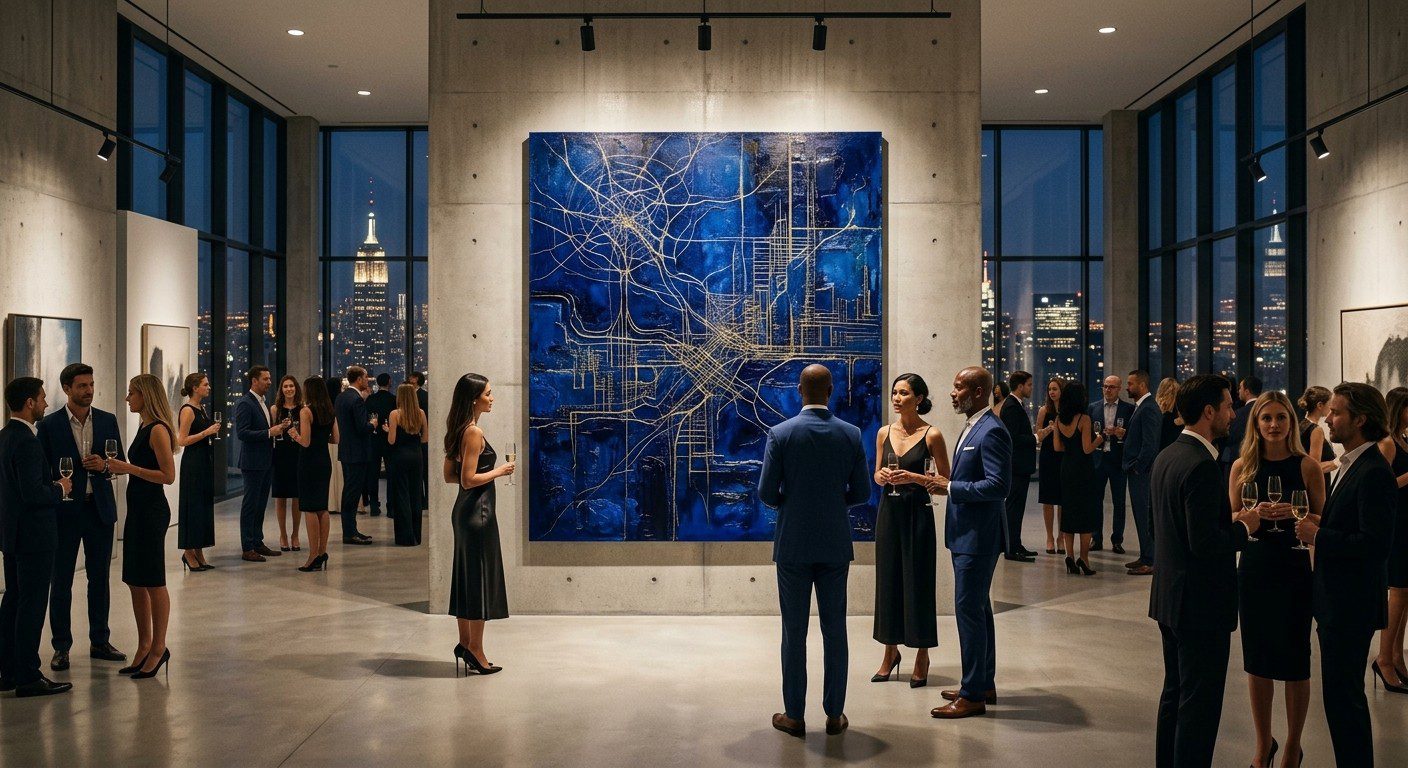
To counteract this “museum effect” without cluttering the architectural layout, elite interior designers rely on a powerful design principle: the spatial anchor art piece. A single, monumental canvas (measuring 40×26 inches or larger) has the unique ability to capture attention, ground a room, and instantly project prestige.
Integrating such powerful artwork into a high-end space requires strict adherence to institutional design rules. Here is how to seamlessly execute large-scale art curation.
Rule 1: Master the Scale and Proportion
A spatial anchor must possess a commanding physical presence to fulfill its purpose. If a painting is too small, it gets swallowed by the architecture; if it is too large, it overwhelms the room’s premium finishes.
- The Minimum Threshold: For executive boardrooms, grand entryways, and luxury living rooms, the canvas should start at 40×26 inches and scale upward depending on wall volume.
- The Golden Ratio of Wall Space: The artwork should occupy roughly 60% to 75% of the available wall space that is not covered by furniture or architectural trim. This allows the painting to breathe while establishing undeniable dominance over the visual plane.
Rule 2: Achieve Material Synergy
Minimalist luxury relies on a curated palette of premium raw materials. Your spatial anchor should complement, not clash with, these texture-driven environments.
When positioning a large-scale painting, ensure its color story and physical composition harmonize with the surrounding elements:
The Synergy Rule: If your space features cold materials like raw concrete, glass, or polished metals, choose a canvas with rich, deep tones (such as deep ultramarine) to inject essential warmth and life into the environment. Conversely, when paired with expensive wood, natural stone, or fine leather, the art should echo these organic textures while remaining elevated.
Rule 3: Balance Texture and Technical Illumination
The interplay of light and texture determines whether a high-value painting looks flat or truly spectacular. Premium, investment-grade artwork often relies on complex, physical layering that requires precise presentation.
- The Textural Play: Look for pieces that utilize a sophisticated mix of mediums—such as the deliberate contrast between matte acrylic and glossy oil. This dual-texture approach gives the painting structural dimension.
- Gallery-Grade Lighting: Standard residential lighting will ruin the depth of a large canvas. High-end spaces require dedicated, narrow-angle art spots. Proper illumination brings out the micro-textures of the glossy oil strokes while preventing unwanted glare on the matte acrylic surfaces, offering a completely different viewing experience depending on the time of day.
Rule 4: Secure Institutional Logistics and Verifiable Provenance
For ultra-high-net-worth clients and top-tier designers executing remote purchases (such as sourcing a piece from a New York gallery for a property in London), operational security is just as critical as the aesthetic outcome. A luxury installation requires museum-grade execution from the invoice to the final mount.
| Stage of Acquisition | Luxury Class A+ Standard |
| Financial & Legal Protection | Secure USD bank wires, formal corporate invoicing, and a legally binding Certificate of Authenticity signed by the artist or designated agent. |
| Museum-Grade Packing | Protection against heavy stretchers or delicate paint textures shifting during transit. Requirements include acid-free paper, high-density foam, and custom-engineered wooden crates. |
| White-Glove Transport | Exclusive reliance on specialized fine-art handlers, such as FedEx Art or DHL Express. |
| Risk Mitigation | 100% comprehensive transit insurance coverage valued at the full appraisal rate of the artwork. |
Conclusion: The Ultimate Focal Point
Integrating a spatial anchor art piece into a minimalist luxury environment is the definitive way to elevate a property from a beautifully designed shell to a highly sophisticated, intellectual space. By respecting the rules of scale, material harmony, specialized illumination, and flawless white-glove logistics, designers and owners ensure that their environment commands respect and reflects an uncompromising commitment to premium quality.