
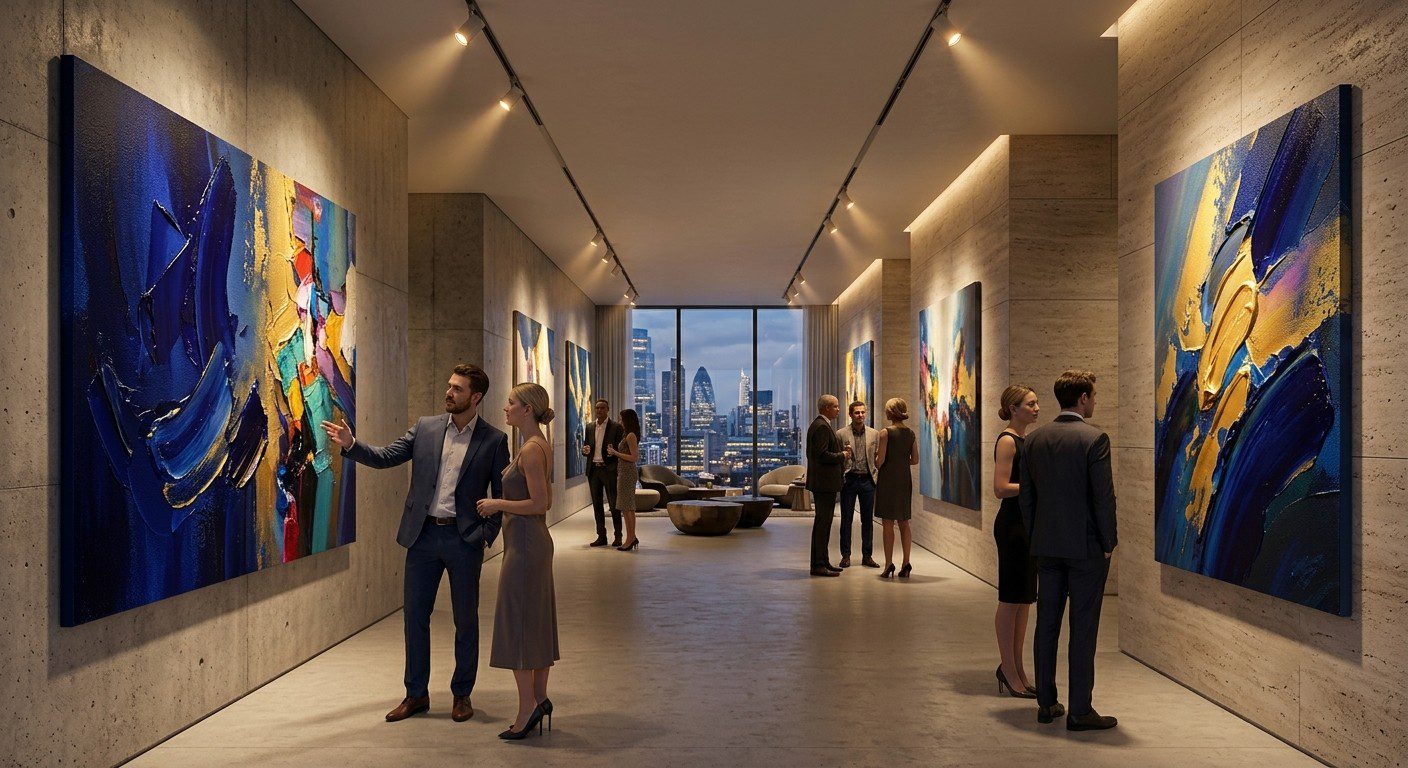
Light, Texture, and Depth: Gallery Lighting Secrets for Mixed-Media Paintings
In the realm of premium interior design, acquiring a monumental canvas is only the first step in establishing a true spatial anchor. For elite designers, architects, and penthouse owners in global hubs like New York, London, Miami, and Dubai, the way an artwork is presented is just as critical as the piece itself.
When integrating large-scale art (typically 40×26 inches and above) into minimalist luxury interiors, lighting becomes the defining factor. This is especially true for contemporary physical paintings that utilize a sophisticated mix of mediums, such as the deliberate combination of matte acrylic and glossy oil.
Standard residential lighting will flatten these complex surfaces. To truly reveal the depth of color—such as a commanding ultramarine—and the intricate play of light on the texture, you must apply professional gallery lighting secrets. Here is the definitive guide to illuminating dual-texture artwork in Class A+ spaces.
The Challenge: Balancing Absorption and Reflection
Mixed-media paintings present a unique optical challenge. Matte acrylics absorb light, creating deep, infinite voids of color. Glossy oils, on the other hand, reflect light, highlighting the physical, raised strokes of the artist’s brush.
If you point a standard light directly at the canvas, the glossy sections will produce harsh, blinding glare, while the matte sections will lose their subtle nuances. The goal of premium gallery lighting is to illuminate the matte depths without causing the glossy textures to overpower the viewer’s eye.
Secret 1: The 30-Degree Angle Rule
The most critical mistake in luxury curation is poor fixture placement. If a light is placed too close to the wall (pointing straight down), it creates heavy, dramatic shadows that distort the artwork’s texture. If placed too far away, it causes direct glare on the glossy oil surfaces.
- The Standard: Professional gallery spotlights should hit the center of the canvas at exactly a 30-degree angle.
- Why it works: This precise angle ensures that the light grazes the textured oil strokes—enhancing their 3D presence—while reflecting the glare downward toward the floor, away from the viewer’s natural line of sight.
Secret 2: Narrow-Beam Spotlights over Wall Washers
Minimalist spaces often feature raw concrete, expensive wood, metal, or premium leather. To ensure the artwork stands out from these rich architectural textures, it requires dedicated, focused illumination.
Do not use general wall washers to light a textured painting. Wall washers flood the entire area, flattening the art and blending it into the background. Instead, utilize narrow-beam directional spotlights (often called framing projectors or art spots). These fixtures concentrate the light entirely on the canvas, making the colors pop and ensuring the artwork acts as a true focal center that commands the room.
Secret 3: Optimizing Color Temperature and CRI
To bring out the profound depth of colors like ultramarine and the warmth of underlying textures, you must strictly control the quality of the light bulb.
- Color Rendering Index (CRI): Always use LED bulbs with a CRI of 95 or higher. This ensures that the pigments are represented exactly as the artist intended, without the muddying effect of cheap lighting.
- Color Temperature: For luxury interiors, aim for a warm, inviting temperature between 2700K and 3000K. This temperature softens the sterility of minimalist design and enhances the richness of glossy oil without making the matte acrylics look artificial.
Protecting the Investment Before the Lights Go On
For a buyer investing in artwork ranging from $6,000 and above, the aesthetic presentation must be backed by uncompromising security and logistics. Before you can light a heavily textured canvas, it must arrive in pristine condition.
High-end art acquisitions demand museum standards of packaging, especially for fragile, dual-texture surfaces. Elite galleries remove transportation risks by utilizing specialized white-glove carriers like FedEx Art or DHL Express. Every piece must be secured using acid-free paper to protect the glossy oils, dense foam, and custom wooden crates, fully backed by 100% transit insurance. Furthermore, buyers require total financial and legal transparency, including official invoices, USD bank transfers, and artist-signed certificates of authenticity.
Conclusion
A large-scale painting is more than a decorative object; it is a sign of prestige, refined taste, and luxury. By applying the 30-degree rule, utilizing high-CRI narrow-beam spotlights, and managing color temperature, you unlock the true potential of mixed-media canvases. Proper lighting ensures that the delicate interplay between matte acrylic and glossy oil transforms the space, making the artwork a mesmerizing spatial anchor from every angle.