
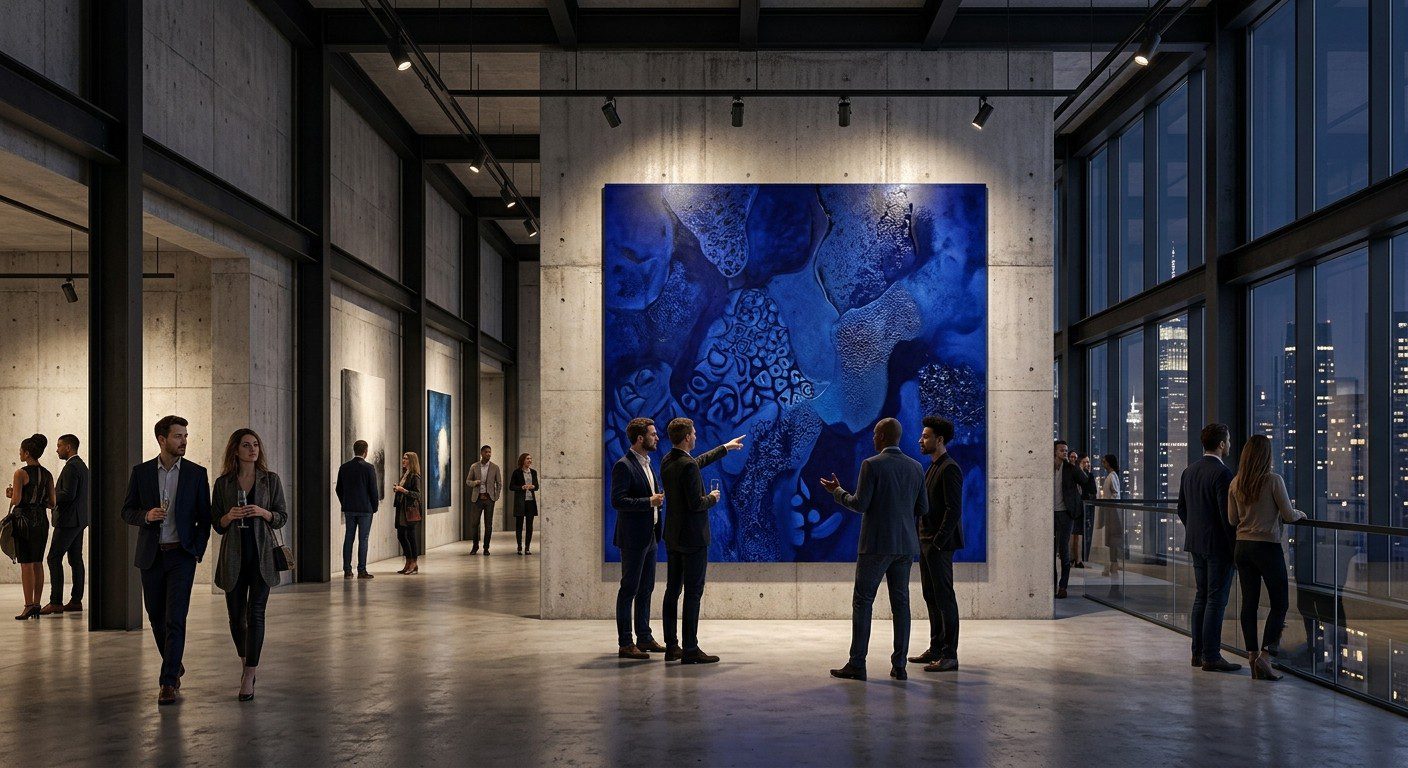
Raw Concrete, Metal, and Conceptual Painting: Selecting the Perfect Focal Point for Exclusive Real Estate
In the realm of Class A+ real estate—from sleek Manhattan penthouses to expansive industrial-chic villas in Miami—a new design language has emerged as the definitive standard of modern luxury. It is a language of architectural honesty, dominated by exposed raw concrete, polished metal, and floor-to-ceiling glass.
This aesthetic, often categorized under “Soft Minimalism” or modern industrial luxury, is highly sought after by high-net-worth individuals (HNWI) for its clean lines and uncompromising sophistication.
However, there is a recurring pitfall in designing these spaces: they can easily feel sterile, unapproachable, and devoid of human narrative. Without a powerful “spatial anchor,” these grand volumes of concrete and metal overwhelm the inhabitants rather than inspire them.
The solution is not more decoration; it is strategic fine art curation. Specifically, monumental conceptual painting serves as the perfect intellectual and visual counterpoint to raw architectural materials.
Here is the strategic framework for selecting the ideal focal point that creates synergy between the canvas and the concrete.
The Rule of Contrast: Organic Intellect vs. Brutal Materials
Raw concrete and metal are materials of absolute certainty; they are hard, unyielding, and brutal. To balance the atmosphere, your chosen artwork must offer the opposite: ambiguity, organic depth, and intellectual narrative.
Minimalist abstract expressiveness or decorative paintings are often too “quiet” for concrete interiors. They get absorbed by the aggressive texture of the walls.
Instead, prioritize conceptual painting. Conceptual work, which focuses on visualizing ideas rather than just aesthetic harmony, provides the mental stimulation that brings a “hard” room to life. For tech visionaries and modern executives inhabiting these spaces, art is an extension of their professional and mental ecosystem—it should provoke thought, not provide comforting decoration.
The Rule of Scale: Commanding the Space
In Class A+ real estate, volume is the true luxury. Therefore, the scale of the fine art focal point is non-negotiable.
Designers curating for raw concrete interiors must abandon standard sizes. A 30×40 inch canvas is decorative; it is not a “spatial anchor.
“To effectively dominate the sterility of concrete and metal, the painting must possess an aggressive scale. Aim for monumental canvases starting at 40×26 inches and above. The artwork should occupy roughly 60-75% of the available wall plane not occupied by furniture, ensuring it instantly commands attention from visitors and immediately signals the prestige of the environment.
The Rule of Texture: Matte vs. Gloss under Gallery Lighting
Perhaps the most sophisticated aspect of modern luxury curation is the interplay of light on diverse textures. Raw concrete is matte, porous, and highly irregular. Metals are glossy, reflective, and precise.
To integrate a canvas effectively, the painting should incorporate texture in its own right. A preferred approach in modern curation is fine art that utilizes a mix of mediums:
- Matte Acrylics: Provide deep voids of absorbing color that harmonize with the porousness of the concrete.
- Glossy Oils or Resins: Create deliberate reflections that echo the surrounding metals, adding dynamic depth and an unexpected layer of luxury when viewed under proper gallery lighting.
Pro Curation Tip: The Lighting Factor
A masterpiece is invisible without dedicated illumination. In a minimalist setting with concrete and metal, standard recessed lights are insufficient. Designers must prioritize narrow-angle, high-CRI (Color Rendering Index) gallery-grade spotlights to ensure the colors—specifically powerful tones like ultramarine or cosmic navy—remain vibrant and are not flattened by the environment.
The Ultramarine Effect: Color Dynamics in the Greyscale
The grey tones of raw concrete provide the perfect neutral gallery backdrop. This allows designers to introduce decisive, powerful color dynamics.
The ultimate contrasting hue for the Class A+ industrial aesthetic is often found in deep, saturated blues—Ultramarine, Cobalt, or Navy.
A massive conceptual painting dominated by deep ultramarine provides an intense burst of energy that greyscale environments crave. Blue is often associated with depth, complexity, and stability. In a space defined by brute force (concrete) and cold efficiency (metal), a deep blue conceptual work provides necessary visual serenity and emotional intelligence.
Conclusion: Investing in Prestige
For the owners of exclusive real estate, the purchase of a grand-scale conceptual painting is more than an aesthetic choice; it is a demonstration of status and refined taste. By adhering to the rules of contrast, scale, texture, and color, designers can ensure they are not merely decorating a high-end property, but defining it. A perfectly curated conceptual work transforms a sterile volume of concrete and metal into a bespoke sanctuary of thought and luxury.
Curating for exclusive spaces requires uncompromising service.