
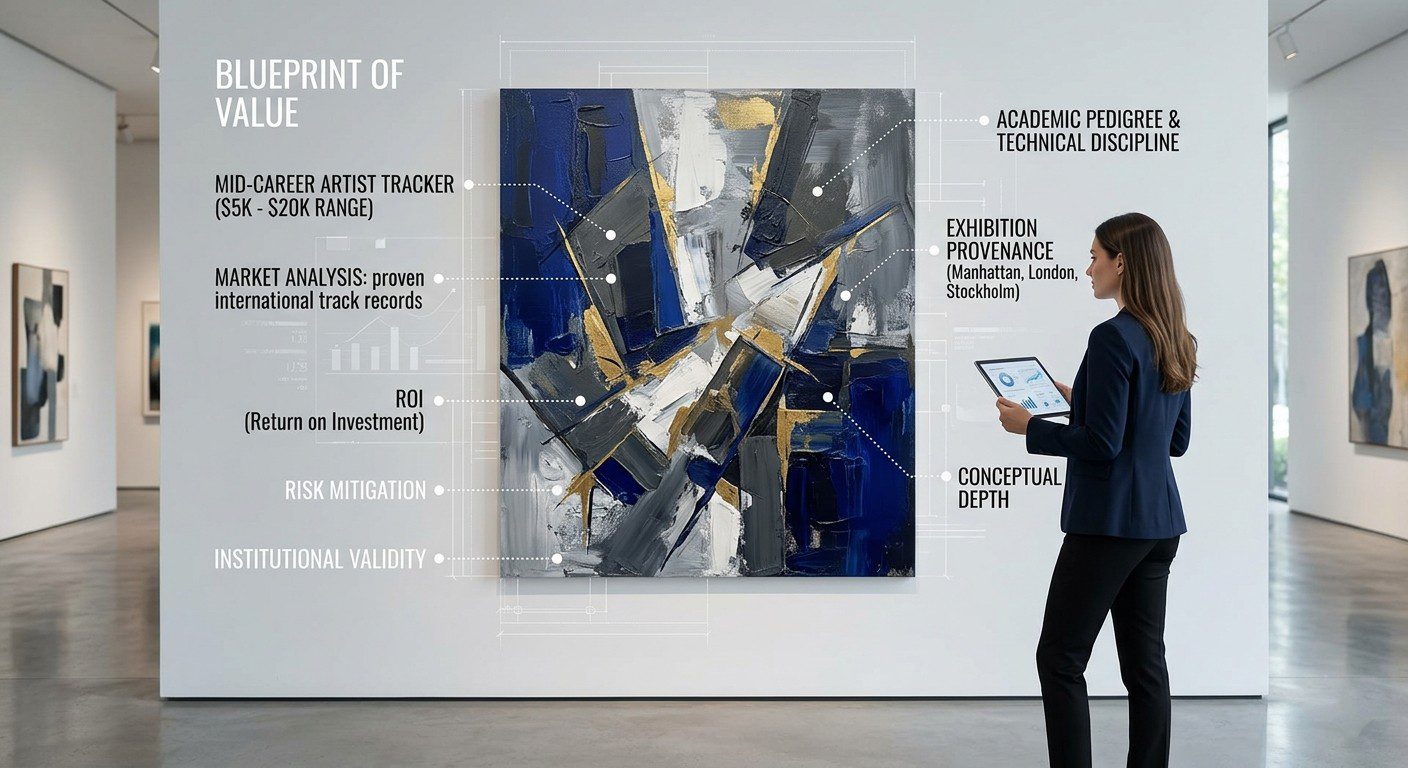
Contemporary Art Investment: A Collector’s Guide to Mid-Career Artists
For high-net-worth individuals and corporate tastemakers, acquiring original paintings is a balancing act between aesthetic resonance and strategic fine art asset allocation. While blue-chip masterpieces command global headlines, the most dynamic market activity occurs within the $5,000 to $20,000 range. This is a highly lucrative segment occupied by rigorously trained creators with proven international track records.
If you are looking into investing in emerging artists and mid-career masters, a critical question arises: how does a discerning collector distinguish a passing trend from a lasting contemporary art investment?
The Pillars of Art Valuation: How to Value Contemporary Paintings
When evaluating the market value of a physical artwork—such as an original large-scale oil and acrylic canvas—industry experts analyze specific parameters that guarantee long-term institutional validity. If you want to master how to value contemporary paintings, focus on these three absolute pillars:
- Academic Pedigree & Technical Discipline: True value often lies at the intersection of rigorous classical training and avant-garde execution. Artists who have mastered structural perspective and complex media (like deep ultramarine oil layers combined with precise acrylic architectural lines) bring a high level of intrinsic craftsmanship that resists market volatility.
- Exhibition Provenance: A robust history of solo and group exhibitions in major art capitals (such as Manhattan, London, and Stockholm) serves as a reliable indicator of an artist’s liquidity and institutional support.
- Conceptual Depth: In the modern market, decorative art depreciates. Intellectual art—pieces backed by proprietary philosophical frameworks, architectural theories, or futuristic concepts—retains value because it sparks critical discourse.
Mitigating Risk in Fine Art Acquisition
To ensure your luxury acquisition functions as a stable alternative asset class, focus on limited curations managed by specialized fine art agencies. Original works from defining series, especially those bridging historical narratives with future-focused philosophies, offer the highest potential for financial appreciation.
When an artist’s trajectory shows a steady transition from prestigious regional institutions to elite private collections, it signals the ideal entry point for a contemporary art investment. Capturing this momentum allows savvy collectors to secure maximum asset value before institutional gallery prices surge.